We continue our review of our recent exhibition featuring art and creative writing inspired by individuals connected to the University. This post features a pioneering botanist, the founder of Life Sciences, the first University Archivist and the driving force behind the Ninewells Cancer Campaign.
Edith Philip Smith
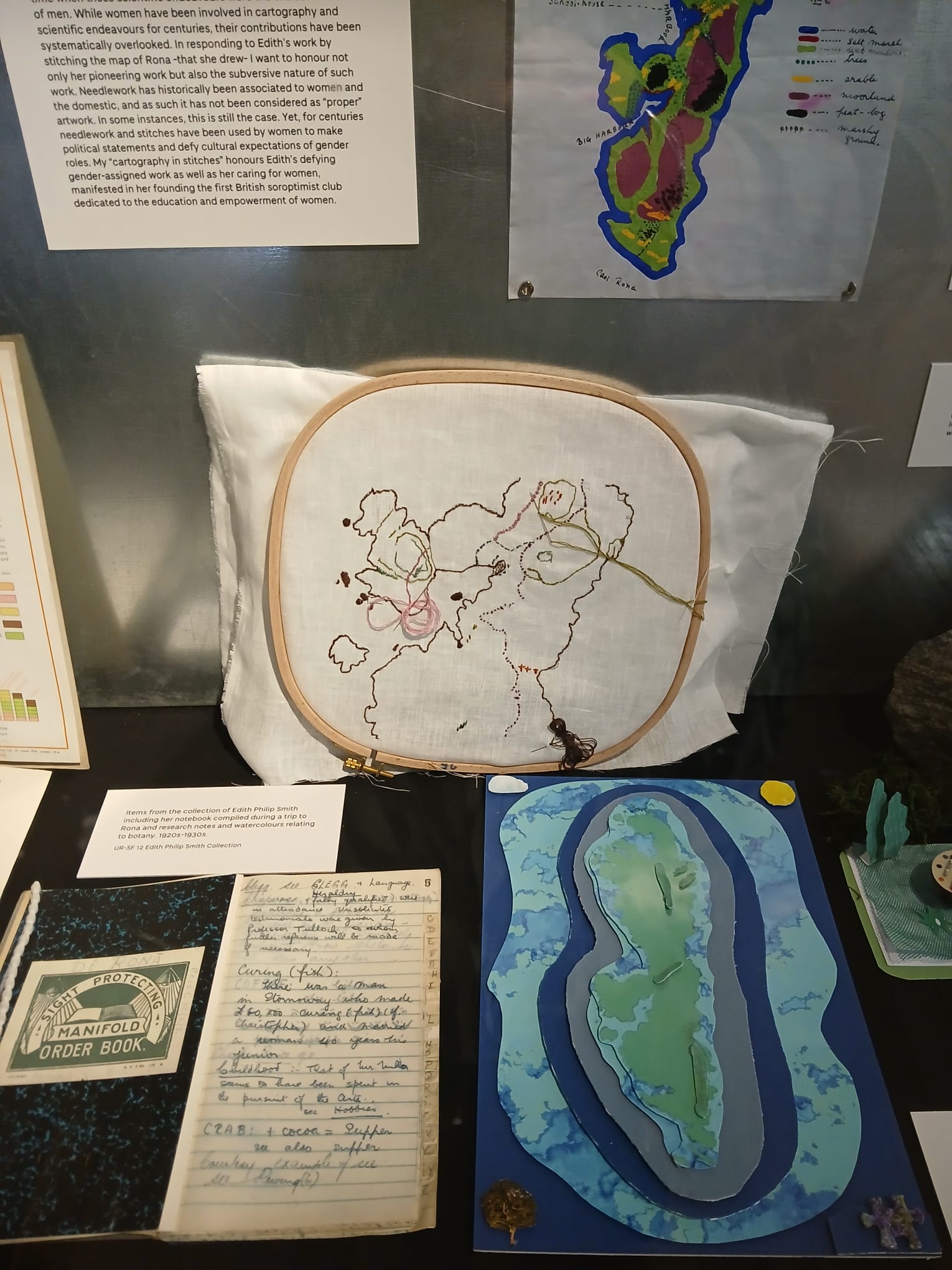
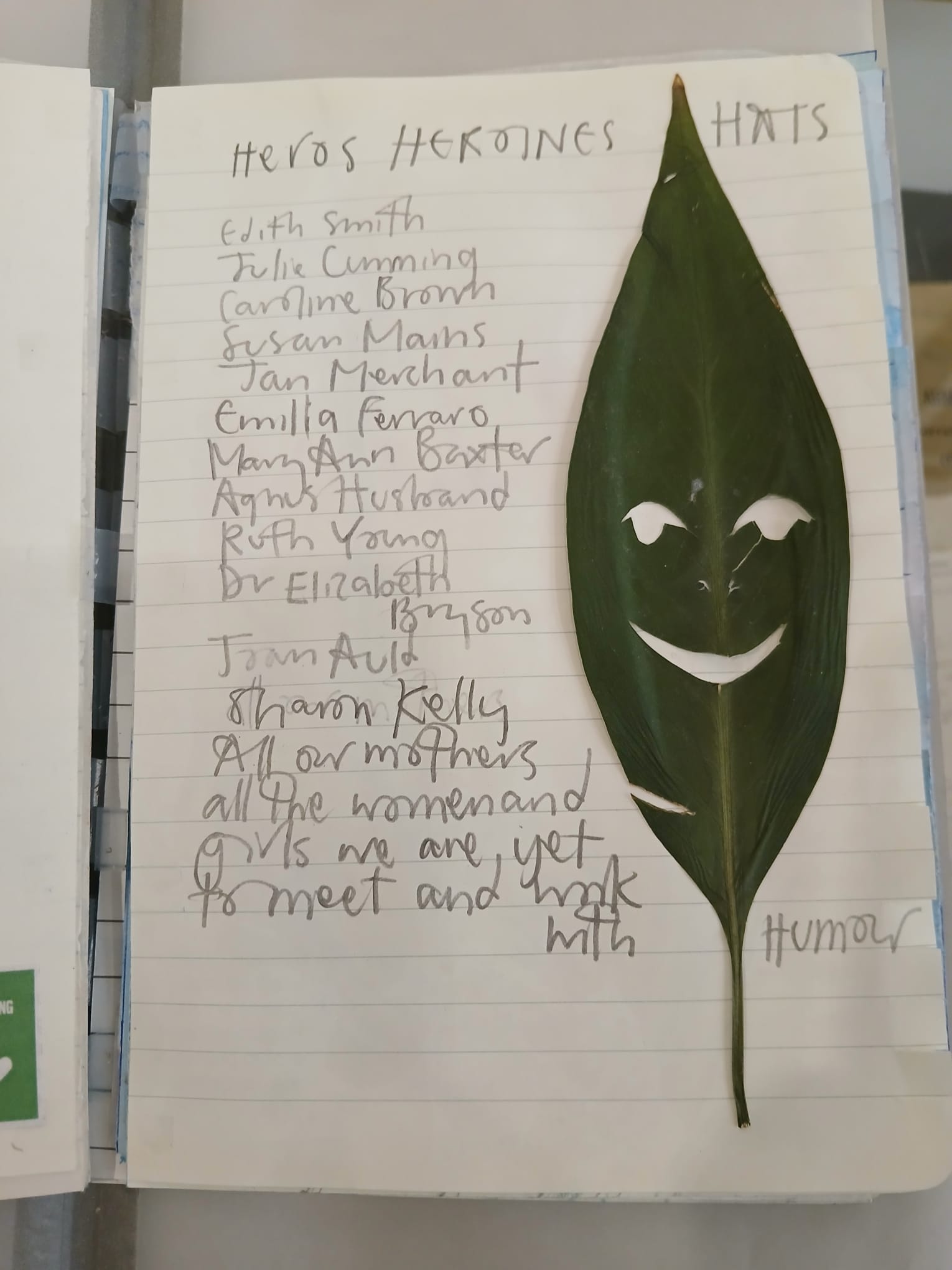
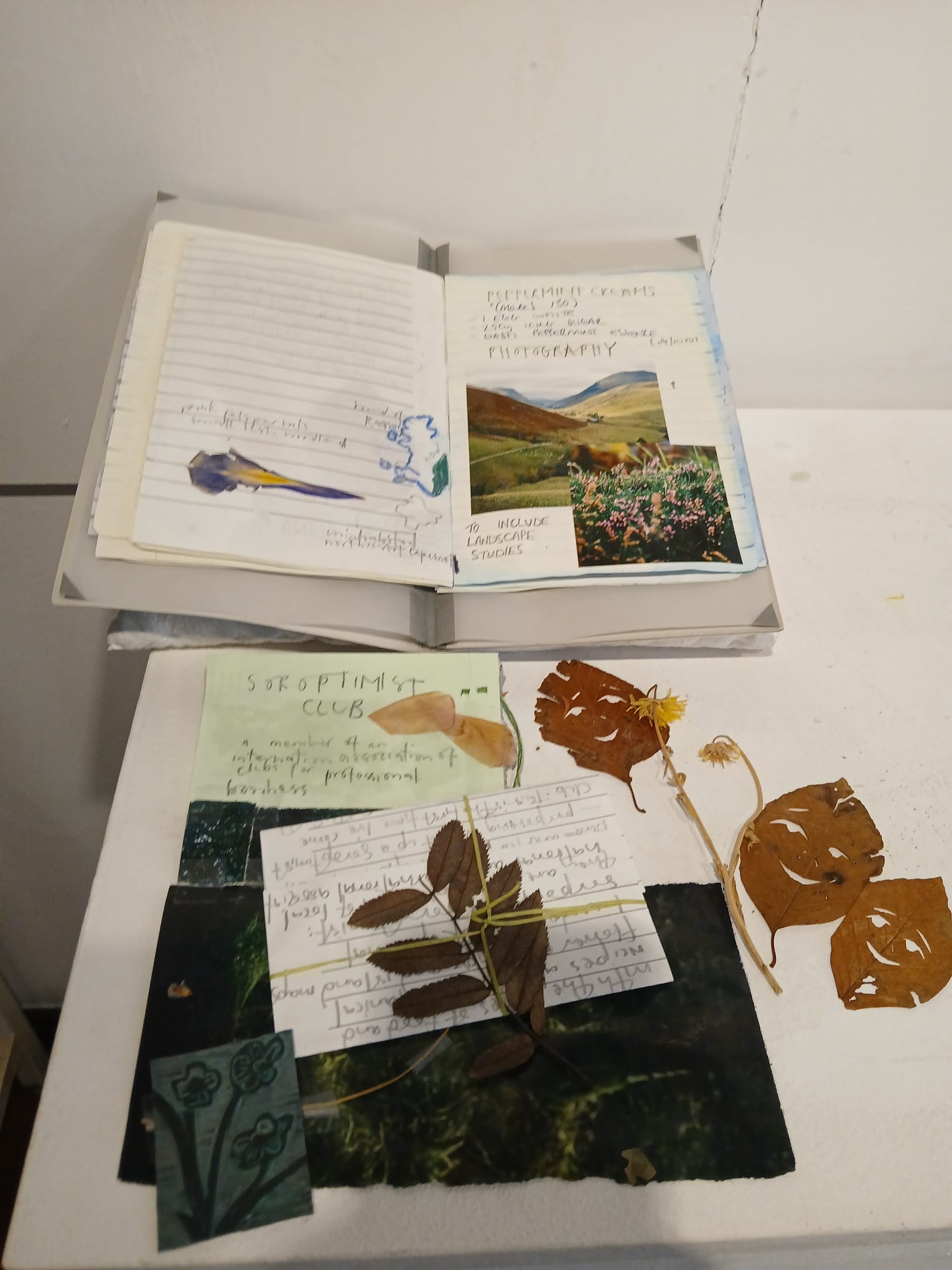
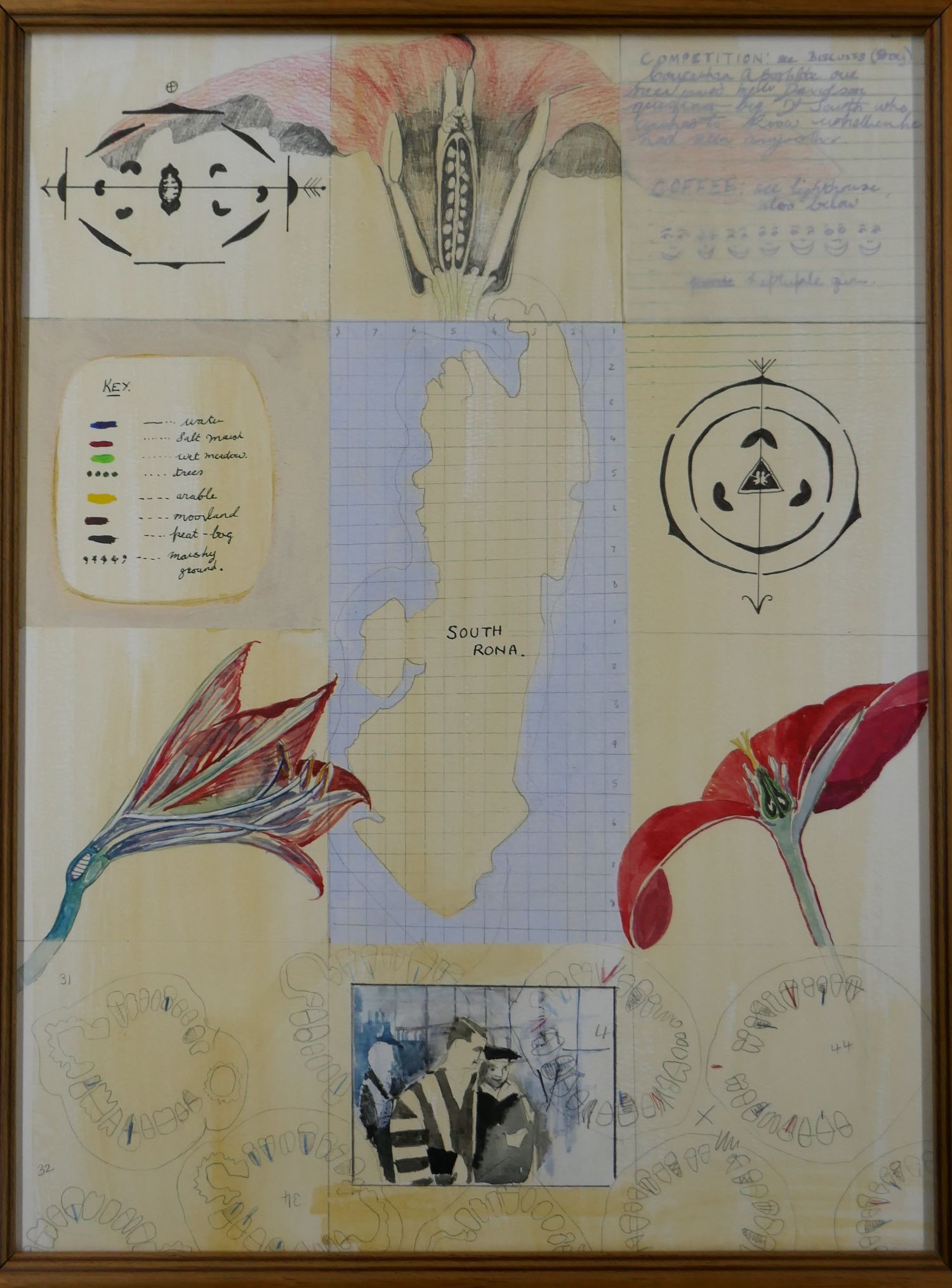
Edith was one of the first female graduates to receive a degree at the University of Oxford and was appointed lecturer in Botany at University College Dundee in 1926. She published widely including an ecological report of a 1933 expedition to South Rona, later playing down her role describing herself as ‘official photographer and cook’. She was also an accomplished artist. In 1955 she became head of the Botany Department. Jackie Ritchie saw her as a Renaissance woman and created a mixed artwork reflecting an imagined page of her notes, capturing her thoughts, scientific work and artwork. Emilia Ferraro’s stitched map ‘cartography in stiches’ of Rona honoured her pioneering and subversive spirit, defiance of gender-assigned work and her care for women, manifested in her involvement in the British soroptimist club. The diorama by Susan Mains and the beautiful notebook by Christine Kingsley and Julie Cumming speak to Edith’s attention to detail, sense of wonder, innovative thinking and cheeky sense of humour.
Robert Percival Cook
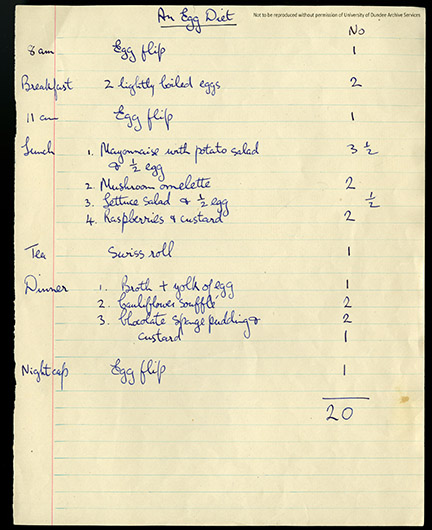
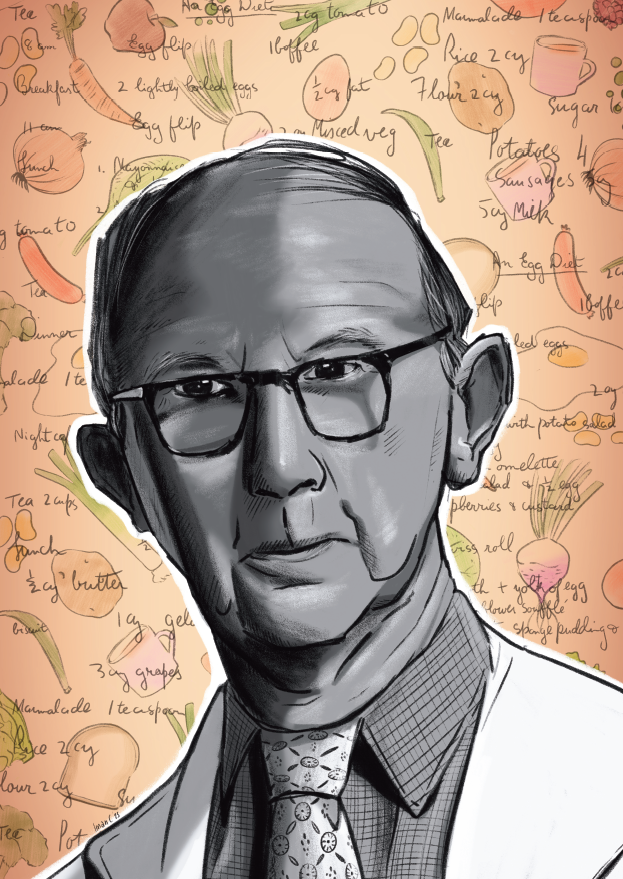
A member of Dundee staff from 1940, Cook was an expert in nutrition and built an international reputation for his research into cholesterol metabolism and animal colouration. Such was his commitment that he often experimented on himself. His work paved the way for Dundee to become a major centre for life sciences because he successfully campaigned for a separate department of Biochemistry. It was established in 1966 and the first Chair, Peter Garland, appointed in 1970; Cook refused the post as he felt he was too old. He inspired Iman Cinjarevic to create this digital portrait with traced snippets of Cook’s handwritten notes from his nutritional research.
Joan Auld
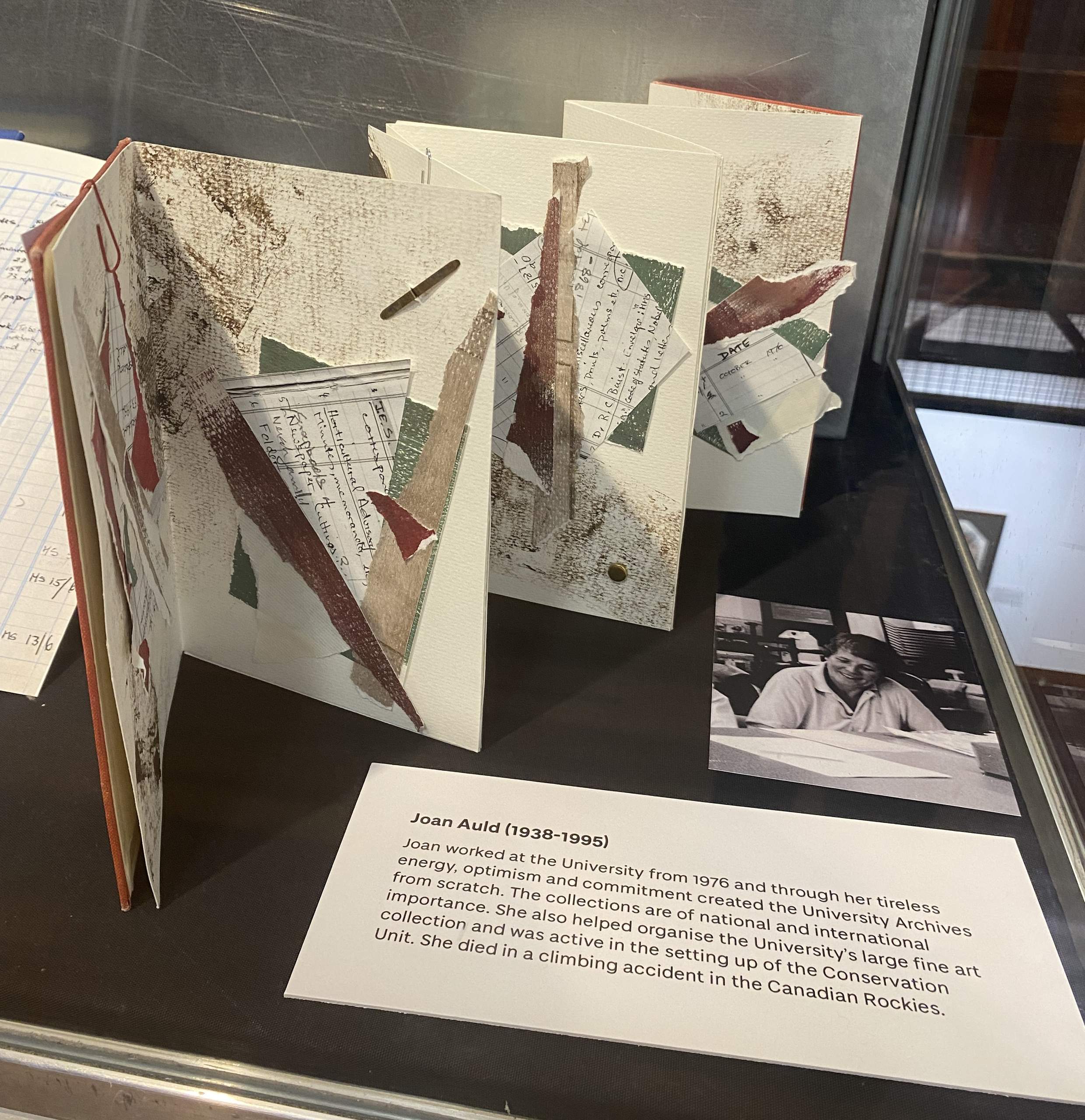
Joan worked at the University from 1976 and through her tireless energy, optimism and commitment created the University Archives from scratch. The collections are of national and international importance. She also helped organise the University’s large fine art collection and was active in the setting up of the Conservation Unit. She died in a climbing accident in the Canadian Rockies. Anna Robb’s artist’s book contains a set of miniature collages waiting to be captured and documented by the Archivist. Pins and paper clips, the bane of an archivist’s life, ineffectively try to keep order.
Jacqui Wood
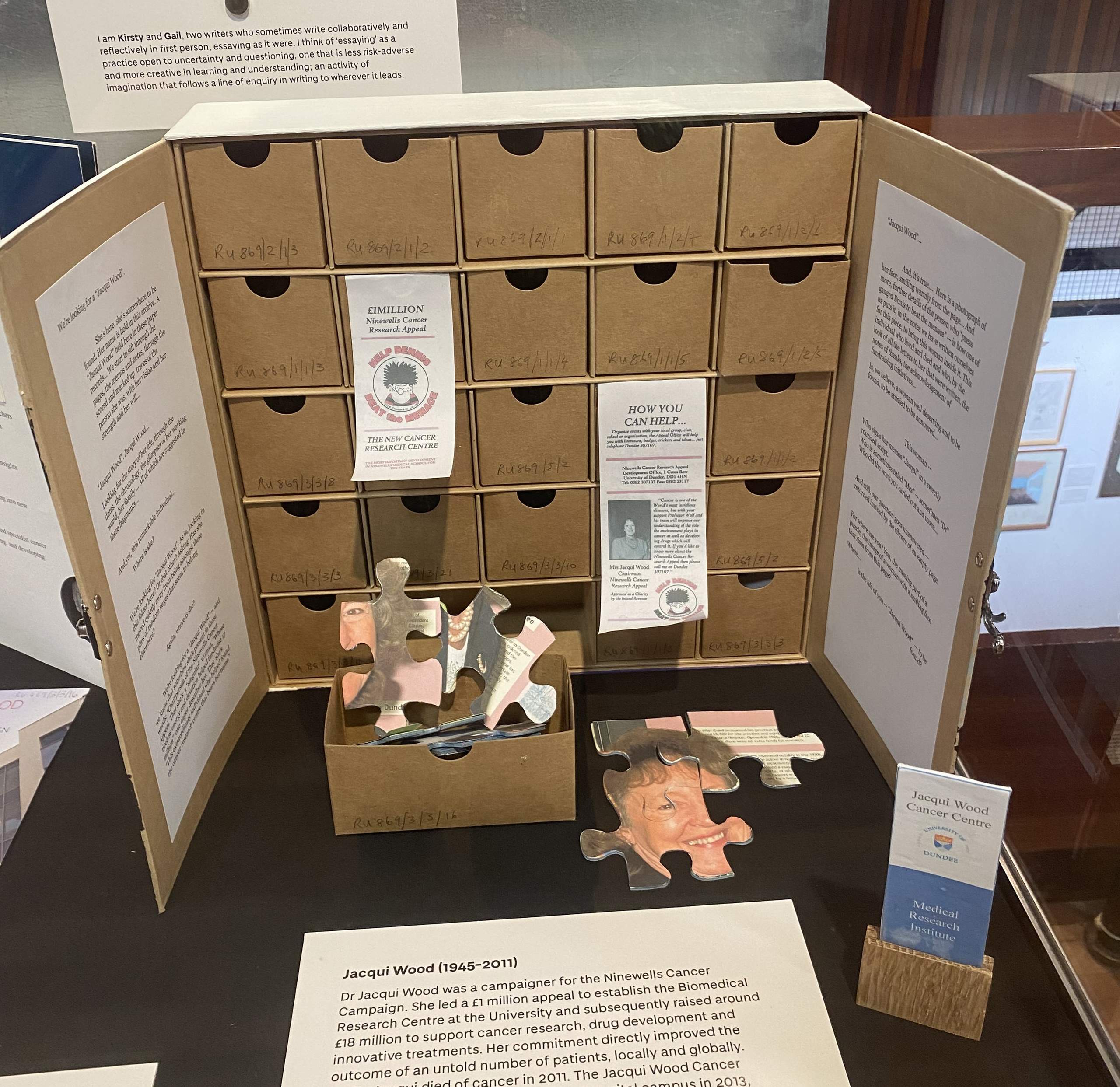
Dr Jacqui Wood was a campaigner for the Ninewells Cancer Campaign. She led a £1 million appeal to establish the Biomedical Research Centre at the University and subsequently raised around £18 million to support cancer research, drug development and innovative treatments. Her commitment directly improved the outcome of an untold number of patients, locally and globally. Sadly, Jacqui died of cancer in 2011. The Jacqui Wood Cancer Centre was opened on the Ninewells Hospital campus in 2013, bringing research scientists and clinicians together to continue the fight against cancer. Gail Low and Kirsty Gunn created an homage to the Centre where the solidity of the building opens out as a series of fragments, paper, files and archival boxes that suggests Jacqui Wood rather than delivers her, reflecting the fragmentary nature of archives as evidence.