Abby Varghese, Leverhulme Doctoral Scholar in Regenerative Innovation.
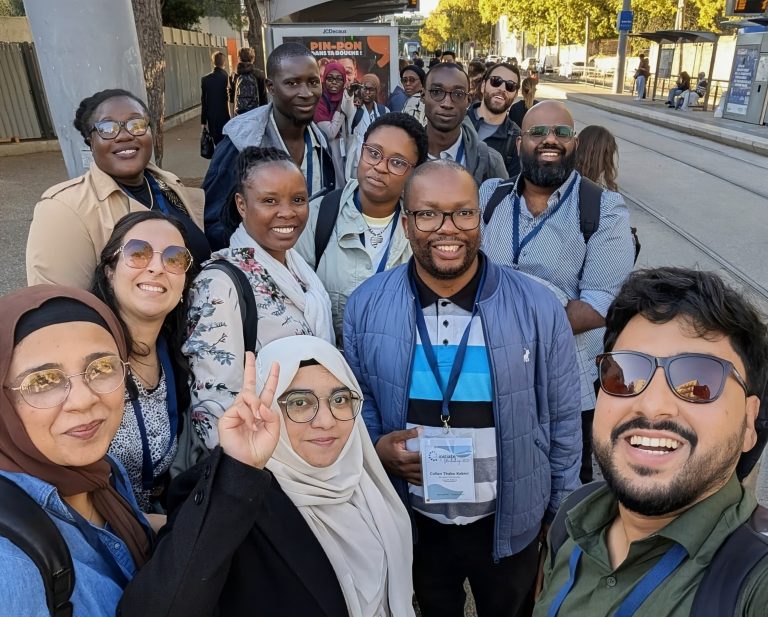
Spending a week in Montpellier for the INITIATE 2025 Workshop was an experience that went far beyond academic learning; it was a journey of co-creation, collaboration, and discovery. The event brought together early-career researchers from across continents, disciplines, and cultures, all united by a shared passion for shaping the future of sustainable water management.
From the very first day, the atmosphere felt alive, filled with curiosity, creativity, and the kind of open-mindedness that only emerges when people step outside their disciplinary comfort zones. The workshop opened with the session “Impacts of Climate Change on Water,” led by Prof. John Rowan and Dr Yves Tramblay, and moderated by Dr Olivier Barreteau. Their insights into intensifying hydrological extremes and the difficulty of translating global models into local water management strategies set the tone for the week. A few days later, the session “Interdisciplinary Water Research: Interaction with Social Sciences” by Dr Oghenekaro Nelson Odume and Dr Jean-Philippe Venot, moderated by Dr Leon Hermans, challenged us to think beyond the technical and consider the social, cultural, and institutional contexts that shape the real-world success of water management solutions. Another session focused on “Emerging Technologies and Water Management,” featuring Dr Chitresh Saraswat and Dr Manon Erguy, moderated by Prof. Fiona Regan, explored innovative scientific and engineering solutions for addressing water challenges, highlighting how new technologies can enhance efficiency, resilience, and sustainability in water systems.
While the workshop featured insightful sessions on climate impacts, emerging technologies, and the social dimensions of water, what stood out most to me were the moments in between: the team challenges, the spontaneous discussions over coffee, and the collective problem-solving that blurred the boundaries between engineering, social science, and policy.
During the Thesis in 180 Seconds, I had the opportunity to present my research on modular resource recovery units to decentralised wastewater systems. The discussion with peers and experts encouraged me to think critically about scalability, energy balance, and societal value, reinforcing the importance of aligning innovation with sustainability and equity.
One of the most memorable parts of the week was the hackathon-style group project. Working with teammates from different countries and research fields pushed us to think in systems, not just about technologies, but about the people, governance, and cultures that shape how those technologies succeed. Our task was to design an innovative water-related project by identifying network resources, opportunities, and risks. It was fascinating to see how diverse perspectives came together to create something tangible and meaningful. By the end, we weren’t just presenting concepts; we were shaping the foundations of future collaborations.
The lab and site visits added another dimension to the experience. Seeing world-class research facilities like the European Institute of Membranes and visiting the Murviel-lès-Montpellier field site reminded us that innovation doesn’t live in isolation; it’s connected to communities, landscapes, and livelihoods. Witnessing how mobile treatment systems like the LIFE ReWa unit operate in real-world contexts made me reflect on how decentralised solutions can empower local resilience.
But what truly defined INITIATE 2025 was its interdisciplinary and intercultural spirit. Every conversation, whether in the lab, at dinner, or during a group brainstorm, brought together ideas shaped by different academic traditions and worldviews. It was a space where an engineer could learn from an anthropologist, where hydrologists debated with sociologists, and where everyone left with a broader sense of purpose.
For me personally, the week reaffirmed why I chose this research path. It showed that the future of water sustainability depends as much on collaboration and empathy as it does on technology. I left Montpellier with new friends, mentors, and a clearer vision of how my own PhD research fits into a greater, global effort toward circular and community-focused water systems.
In the end, INITIATE 2025 was a reminder that solving water challenges starts with people learning together, sharing openly, and building bridges across disciplines and borders.
.
.
Esther Mabedi, Africa Doctoral Fellow.
The 2025 INITIATE workshop took place in Montpellier, France, from 6th to 11th of October and included a series of talks, site visits and group activities. In attendance were over 30 people from all 7 continents working on water-related issues in their respective universities.
The workshop was a wonderful networking experience with such a diverse group of people. The talks given by professors and faculty members of the INIITIATE institutions were insightful on real-world research in water processes, water policy engagement, the business side of water and its impact on societies, and new technologies in water research, i.e. Artificial Neural Networks and Quantum Computing.
During the two site visits that I was a part of, we got to see the equipment in the water laboratory at the University of Montpellier. The lab can analyse basic water chemistry as well as more complicated analyses of isotopes in water and solid geologic and archaeological materials. The second site visit was to two sites of water treatment at Murviel-les-Montpellier, where wastewater from the small town is treated and reused for irrigation in a pilot project. The second was to a treatment plant on wheels in Cournonterral, where the final stages of water treatment are done in a van that moves around different water treatment plants.
Finally, for the most part, the activities during the workshop involved working with other PhD students attending the workshop and members of INTIATE from the different institutions. All cohort 2025 students got to present their work in 3 minutes, which was challenging, but I got to learn how to talk about my work in simple language. We worked on ideation activities that involved working in different groups and presenting our work to the rest of the groups, which was insightful as I worked with people with different perspectives, ideas and backgrounds, yet managed to complete the tasks given.
All in all, the workshop was insightful on the different research being done and a great networking week with other PhD students and researchers.