
Magnetoencephalography
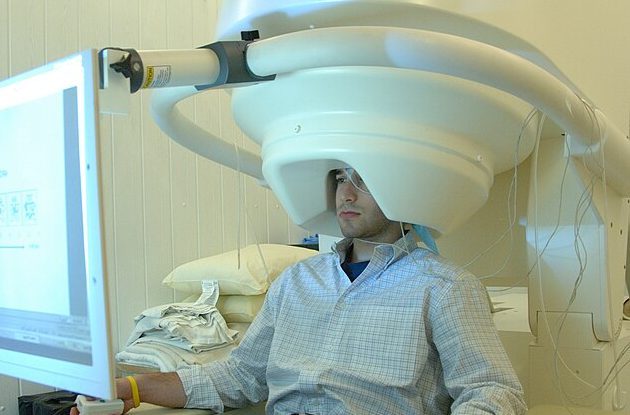
Measuring healthy and pathological human brain activity with unprecedented precision is a rapidly growing field with myriad applications relating to both cognitive and clinical neuroscience and huge funding potential. In human neuroimaging, magnetoencephalography (MEG) is the cutting-edge technology to achieve this. MEG measures brain activity with millisecond timing and excels at showing from where in the brain different activities originate.
Optically Pumped Magnetometers- Magnetoencephalography
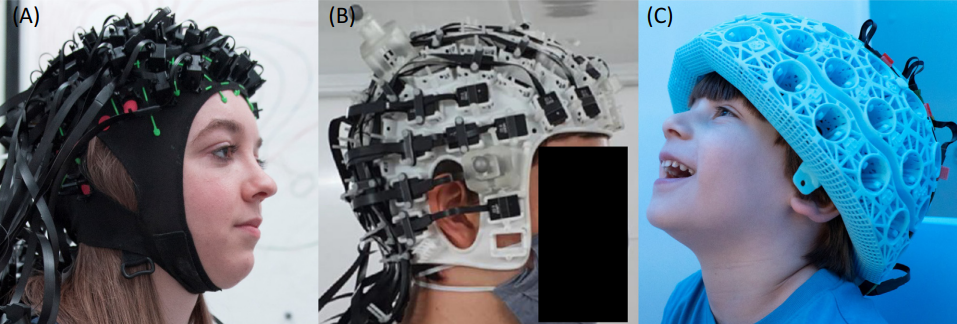
Newly developed optically pumped magnetometer (OPM-) MEG devices use high-sensitivity quantum sensors that work at room temperature and significantly cut the procurement, maintenance and research costs compared with conventional devices (e.g., Scotland’s only MEG at the University of Glasgow), which require super-cooling with liquid Helium – a scarce and expensive resource. OPM-MEG can also allow movement during recordings and as sensors are closer to the scalp higher signal-to-noise can be achieved.
Our Research
Scotland’s first OPM-MEG system will take Scottish neuroscience to the cutting edge of quantum sensing of human neurophysiology.